
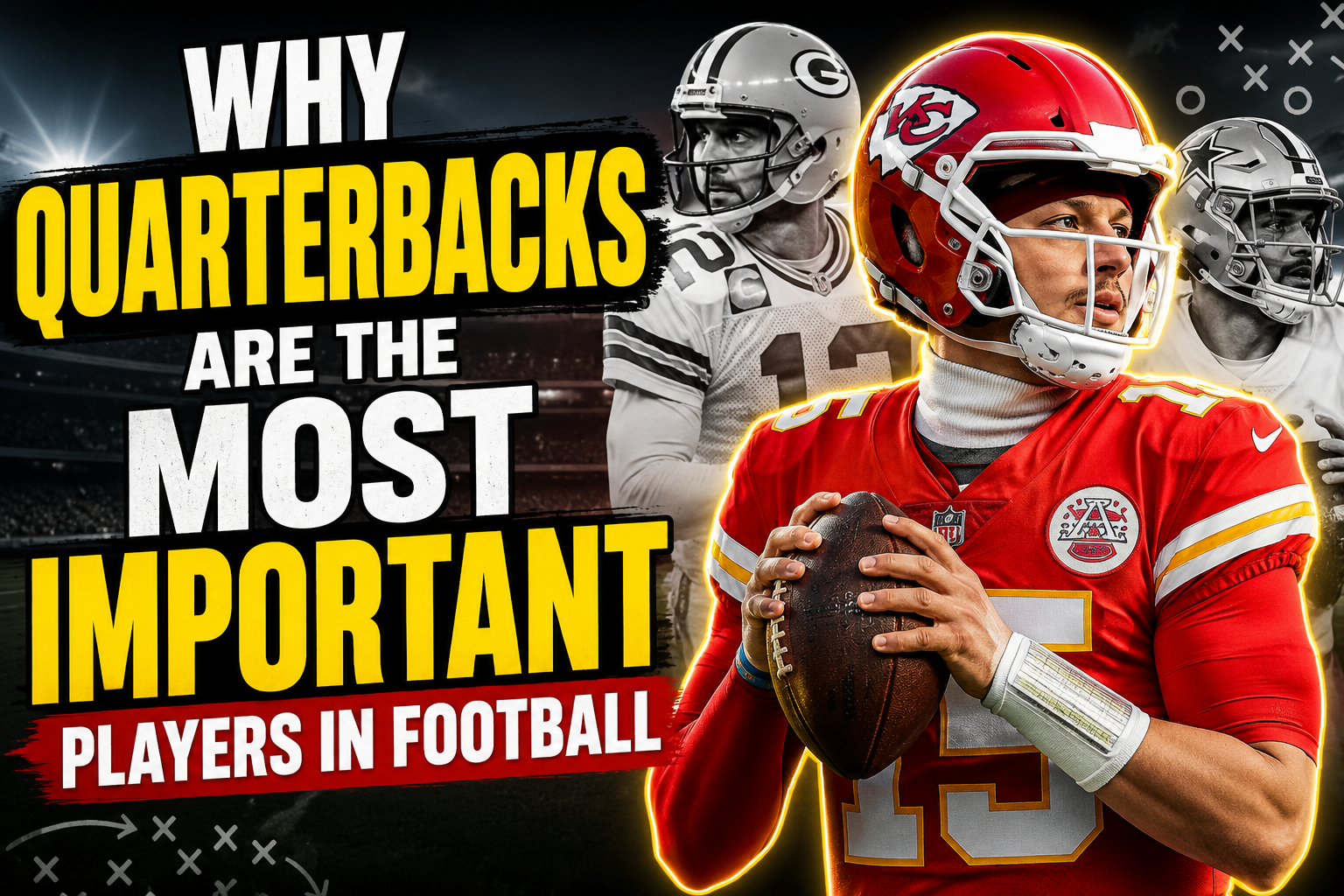
In football, every position matters. Offensive linemen protect, running backs fight for yards, wide receivers create big plays, defenders stop drives, and special teams can change field position in seconds. But even with all those important roles, one position stands above the rest: quarterback.
There is a reason fans, coaches, analysts, and media members spend so much time talking about quarterbacks in football. The quarterback touches the ball on almost every offensive play. He controls the tempo, reads the defense, makes decisions before and after the snap, and often becomes the face of the franchise.
A great quarterback can lift an entire team. A struggling quarterback can make even a talented roster look average. That is why NFL teams spend years searching for the right player at the position. When a team finds its quarterback, everything changes.
The Quarterback Controls the Offense
The quarterback is the main decision-maker on offense. Before the ball is snapped, he must look at the defense, understand the coverage, identify pressure, and sometimes change the play. This all happens in just a few seconds.
A quarterback may walk to the line with one play called in the huddle, then realize the defense is showing something different. Maybe a blitz is coming. Maybe the defense is leaving a receiver in single coverage. Maybe the original run play will not work against the front. In that moment, the quarterback has to adjust.
This control makes the position extremely important. A quarterback is not just throwing the ball. He is managing the entire offense. He must understand what every receiver is supposed to do, where the protection is set, and where the ball should go if the defense changes.
The best quarterbacks in football make the game easier for everyone around them. They put receivers in good situations, help offensive linemen with protection calls, and keep the offense organized.
Decision-Making Separates Good From Great
Arm strength is exciting. Deep throws get highlights. Fast scrambles make fans cheer. But decision-making is often what separates a good quarterback from a great one.
A quarterback must decide where to throw the ball quickly. If he waits too long, the pass rush can arrive. If he forces a throw, the defense may intercept it. If he checks down too often, the offense may struggle to create big plays.
Every play has risk. The quarterback must balance patience with aggression. Sometimes the smartest play is a short pass. Sometimes it is throwing the ball away. Sometimes it is taking a chance downfield because the matchup is right.
This is why experience matters. Young quarterbacks often have talent, but they may need time to learn how NFL defenses disguise coverage. A defense may look like one coverage before the snap and rotate into another after the ball is snapped. The quarterback must process that movement instantly.
Great quarterbacks do not always make the flashiest play. They make the right play.
Leadership Matters at Quarterback
Quarterback is not only a physical position. It is also a leadership position. Teammates look to the quarterback in difficult moments. When the team is trailing, when the crowd is loud, or when the offense is struggling, the quarterback must stay calm.
Leadership can show in many ways. Some quarterbacks are loud and emotional. Others are quiet and steady. There is no single personality type that works for everyone. What matters is trust.
Players must believe their quarterback is prepared. They must believe he can handle pressure. They must believe he will take responsibility when things go wrong and give credit when things go right.
A quarterback’s attitude can shape the entire offense. If he panics, the team may panic. If he stays composed, the team has a better chance to respond.
That is one reason teams care so much about interviews, work habits, and character when evaluating quarterbacks. Talent is important, but leadership is part of the job.
Quarterbacks Must Understand Defenses
One of the hardest parts of playing quarterback is reading defenses. NFL defenses are complex, fast, and designed to confuse. Defensive coordinators try to disguise their intentions before the snap so the quarterback makes the wrong decision.
A quarterback must identify:
- Where pressure might come from
- Whether the defense is in man or zone coverage
- Which defender could drop into coverage
- Where the safeties are positioned
- Which receiver has the best matchup
- Whether the running play should be changed
This mental side of the game is huge. A quarterback with average physical tools but excellent understanding can still be effective. A quarterback with elite athletic ability but poor processing may struggle.
The best quarterbacks study film constantly. They learn defensive tendencies, player habits, blitz packages, and coverage rotations. By the time the game starts, they are not just reacting. They are anticipating.
That anticipation is what makes elite quarterback play look smooth. The ball comes out before the receiver is fully open because the quarterback already knows where the opening will be.
The Quarterback Impacts Every Skill Player
The quarterback’s performance affects the entire offense. Wide receivers need accurate passes. Tight ends need timing. Running backs need the defense to respect the passing game. Even offensive linemen benefit from a quarterback who gets the ball out quickly and moves well in the pocket.
A strong quarterback can increase the value of everyone around him. Receivers may produce better numbers because the ball arrives on time. Running backs may face lighter boxes because defenses fear the pass. Coaches may open the playbook because they trust the quarterback to handle more responsibility.
On the other hand, poor quarterback play can limit an offense. If the defense does not fear the passing game, it can crowd the line of scrimmage and make life harder for the running back. If passes are late or inaccurate, receivers may not get chances to make plays. If the quarterback takes too many sacks, drives stall.
This is why quarterbacks in football are judged so heavily. Their play affects far more than their own statistics.
Pocket Presence Is a Special Skill
Not every quarterback needs to be a great runner, but every quarterback needs pocket presence. Pocket presence means feeling pressure, moving slightly to avoid it, and keeping eyes downfield.
This skill is harder than it looks. A quarterback must stay calm while large defenders are rushing toward him. He cannot always look directly at the pass rush because he also has to read coverage. He must feel where the pressure is coming from and move at the right time.
Some quarterbacks escape pressure by scrambling. Others step up in the pocket and deliver the throw. Both styles can work. What matters is avoiding unnecessary sacks and keeping plays alive.
A quarterback with strong pocket presence helps the offensive line. Even if the protection is not perfect, he can make small movements that create throwing lanes. That can be the difference between a failed play and a big gain.
Quarterbacks Define Team Identity
Many NFL teams are identified by their quarterback. When a team has a star at the position, the entire franchise feels more stable. Fans have hope. Coaches can build a system around his strengths. The front office can plan long-term.
A mobile quarterback may lead to an offense with more designed runs and play-action. A strong pocket passer may lead to a timing-based passing attack. A quarterback with a huge arm may allow the offense to attack deep more often. A smart veteran may give coaches freedom to change plays at the line.
The quarterback becomes the center of the team’s football identity.
That is why quarterback changes feel so important. When a team drafts a young quarterback, signs a veteran, or changes starters, fans immediately wonder what it means for the future. The position carries that much weight.
Why Teams Take Big Risks for Quarterbacks
NFL teams often take major risks to find a quarterback. They trade draft picks, move up in the draft, sign expensive contracts, and build entire plans around one player. This happens because the reward is so high.
A true franchise quarterback can keep a team competitive for many years. He gives the organization direction. He makes it easier to attract talent, sell hope to fans, and build a winning culture.
Of course, the risk is also high. If a team misses on a quarterback, it can lose valuable time and resources. Coaches may lose jobs. General managers may be replaced. Fans may grow frustrated.
Still, teams continue taking those chances because no position impacts winning quite like quarterback.
Final Thoughts
Football is the ultimate team sport, and no quarterback wins alone. He needs blocking, coaching, receivers, defense, and special teams. But even in a team game, the quarterback carries a unique level of responsibility.
The best quarterbacks in football are more than passers. They are leaders, decision-makers, problem-solvers, and field generals. They control the offense, read defenses, manage pressure, and give their teams confidence.
That is why the position receives so much attention. When a team has the right quarterback, the future feels brighter. When a team is still searching, every season feels uncertain.
In the NFL, talent is everywhere. But a great quarterback can be the difference between an average team and a championship contender. That is what makes the position the most important in football.

No comment