
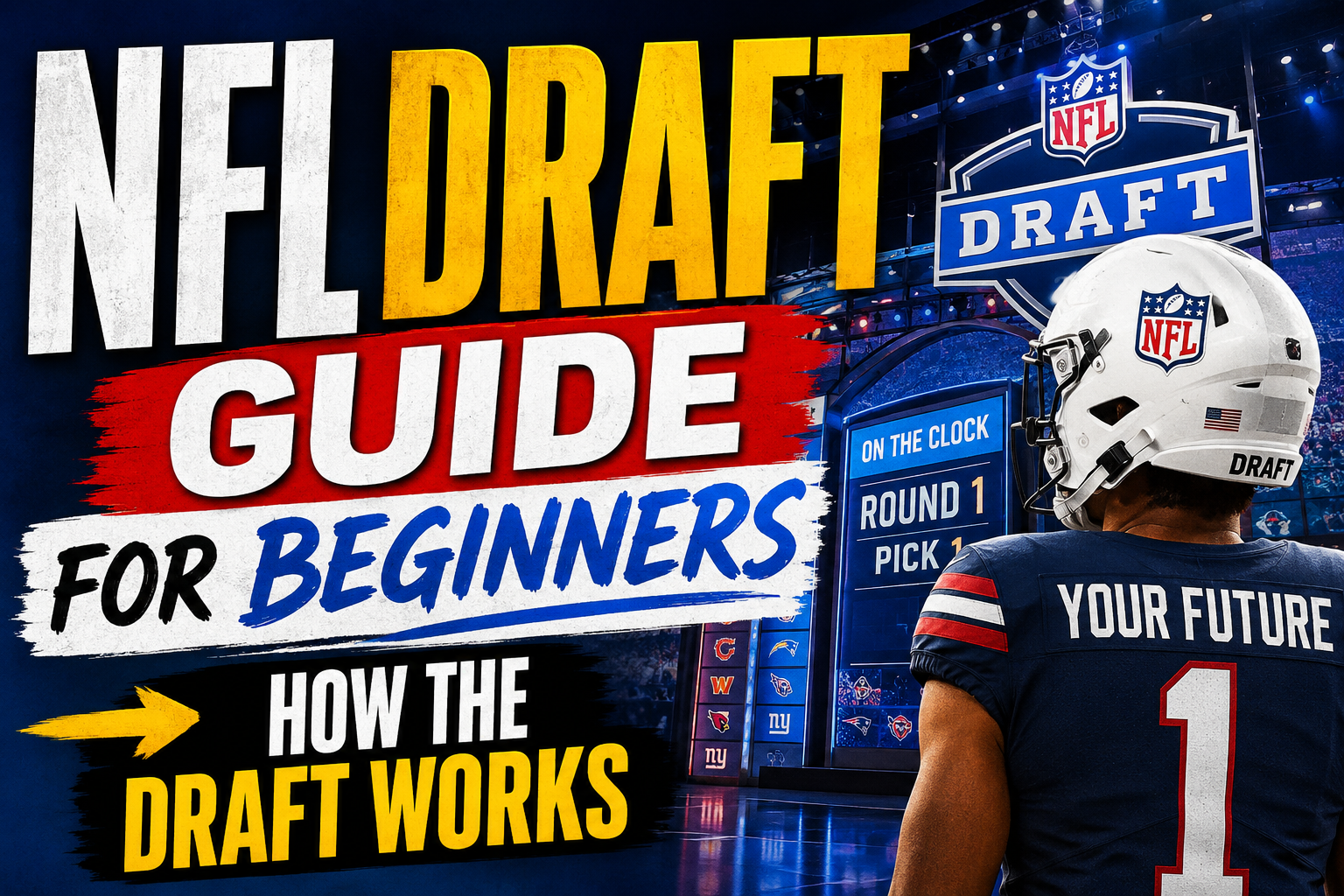
For new football fans, the NFL Draft can feel confusing at first. Teams take turns selecting college players, fans argue about quarterbacks, analysts talk about “draft boards,” and every pick is treated like it could change a franchise forever. If you are still learning the game, this NFL Draft guide will help you understand why the draft matters, how it works, and what fans should watch.
The NFL Draft is one of the biggest events of the football offseason. It gives teams a chance to add young talent, fix roster weaknesses, and build for the future. Some draft picks become stars. Some become solid role players. Others never reach expectations. That uncertainty is part of what makes the draft so exciting.
A great draft can turn a struggling team into a playoff contender. A bad draft can set a franchise back for years. That is why coaches, general managers, scouts, players, and fans pay so much attention to every selection.
What Is the NFL Draft?
The NFL Draft is the process where NFL teams select eligible college football players to join their rosters. Instead of every team freely signing all the best young players, the draft creates an organized system. Teams pick one at a time, round by round.
The goal is to keep the league competitive. Teams that struggled in the previous season usually get earlier picks, while stronger teams pick later. This gives weaker teams a better chance to improve by selecting top college talent.
The draft is not only about finding superstars. Teams also use it to build depth. A franchise needs more than a quarterback, running back, and wide receiver. It needs offensive linemen, defensive backs, linebackers, tight ends, special teams players, and backups who can step in when injuries happen.
How Does the NFL Draft Order Work?
In simple terms, the worst teams from the previous season usually pick near the top of the draft. The best teams usually pick near the bottom. Playoff teams are placed later in the order, with the Super Bowl winner picking last in each round.
This system helps create balance. If a team finishes with a poor record, it may get the chance to select one of the best players available. That player could become the foundation for the team’s rebuild.
However, draft order is not always fixed because teams can trade picks. A team may move up to select a player it loves, or move down to collect more picks. This is one of the most exciting parts of the NFL Draft.
For example, if a team badly needs a quarterback, it may trade several picks to move higher. Another team may decide it does not need that spot and would rather gain extra selections later.
How Many Rounds Are in the NFL Draft?
The NFL Draft has seven rounds. Each team starts with one pick in each round, but trades and compensatory picks can change the total number of selections.
The first round gets the most attention because it includes the biggest names and highest expectations. These players are often expected to become starters quickly. Quarterbacks, offensive tackles, pass rushers, wide receivers, and cornerbacks are often selected early because those positions are highly valuable.
But good players can be found in every round. Many great NFL careers have started outside the first round. Smart teams do not stop working after the big-name prospects are gone. They keep looking for players who fit their system and have room to grow.
Why the First Round Gets So Much Attention
The first round is where teams often make franchise-changing decisions. A top pick can bring hope to a fan base, especially if the team selects a quarterback or another impact player.
First-round picks also come with pressure. Fans expect them to perform. Media members analyze every mistake. Coaches are asked when the player will start. If a first-round pick struggles, people notice quickly.
That does not mean every first-round player must become a star immediately. Some positions take time to develop. Quarterbacks may need to learn a new offense. Offensive linemen may need to adjust to NFL speed. Defensive players may need time to understand professional schemes.
Still, first-round picks are valuable because teams believe these players have a strong mix of talent, athletic ability, and future potential.
What Do NFL Teams Look for in Draft Prospects?
Every team evaluates prospects differently, but most front offices look at several key areas.
First, they study talent. Can the player run, block, tackle, throw, catch, cover, or rush the passer at a high level? Physical ability matters because the NFL is faster and stronger than college football.
Second, teams look at production. Did the player perform well in college games? Did he make big plays against strong competition? Did his performance improve over time?
Third, teams evaluate character and work habits. Talent alone is not enough. NFL players must study film, learn playbooks, handle pressure, and stay disciplined. A talented player who does not work hard may struggle.
Fourth, teams look at fit. A player may be talented but not right for every system. A defensive end in one scheme might be better as an outside linebacker in another. A wide receiver may be perfect for a vertical passing offense but less useful in a short passing system.
This is why an NFL Draft guide is useful for beginners. The best pick is not always the biggest name. Sometimes, the best pick is the player who fits what a team actually needs.
What Is a Draft Board?
A draft board is a team’s ranking of players. Before the draft, teams organize prospects based on talent, position, medical information, interviews, and scheme fit.
Fans often hear the phrase “best player available.” This means a team selects the highest-rated player on its board, even if that position is not the team’s biggest need. Other times, teams draft for need, meaning they choose a player who fills a specific roster hole.
The best teams usually balance both ideas. They do not want to ignore major weaknesses, but they also do not want to pass on great talent just because of position.
A strong draft board helps teams stay calm. When the clock is running and other teams are making surprising picks, a clear plan can prevent panic.
Why Teams Trade Draft Picks
Draft trades happen for many reasons. A team may trade up because it believes one player is special. This often happens with quarterbacks. If a team thinks a quarterback can become its long-term starter, it may pay a high price to get him.
Teams may also trade down. This means they move to a later pick and receive extra selections in return. Rebuilding teams often like this strategy because they need many players, not just one.
A team with a strong roster may trade picks for a veteran player instead of drafting a rookie. This usually happens when the team wants to win immediately.
Draft trades are exciting because they reveal how teams think. A trade up shows urgency. A trade down shows patience. Both strategies can work if the team evaluates talent correctly.
What Positions Are Most Valuable?
All positions matter in football, but some are often valued more highly in the draft.
Quarterback is usually the most important position. A great quarterback can change the direction of a franchise. That is why teams often take big risks to find one.
Offensive tackle is also valuable because protecting the quarterback is critical. A strong left tackle can give the quarterback more time and help the entire offense function better.
Pass rushers are important because pressuring the opposing quarterback can ruin an offense’s timing. Cornerbacks are valuable because they cover top wide receivers. Wide receivers are also highly valued because modern offenses need explosive passing plays.
Running backs, linebackers, safeties, tight ends, centers, and guards can all be important too, but they are sometimes drafted later depending on team philosophy and roster needs.
Why Some Draft Picks Fail
Not every talented college player becomes a successful NFL player. The jump from college football to the NFL is difficult. Players face faster opponents, more complex playbooks, longer seasons, and higher expectations.
Some players fail because of injuries. Others struggle because they do not fit the team’s system. Some need development but are rushed into action too early. Others may have physical talent but struggle with preparation or consistency.
This is why the draft is never guaranteed. Even the smartest teams miss on players. Scouting is about reducing risk, not eliminating it completely.
Why Late-Round Picks Matter
While first-round picks get the spotlight, late-round picks can be extremely important. These players may not be famous on draft night, but they can become valuable starters, special teams leaders, or reliable backups.
Good teams often separate themselves by finding talent later in the draft. A fifth-round offensive lineman who becomes a starter can save a team money. A sixth-round receiver who becomes a dependable target can change an offense. A seventh-round linebacker who becomes a special teams captain can help the roster in ways fans may not always notice.
Depth wins in the NFL. Injuries happen every season, and teams need affordable players who can step in.
Final Thoughts
The NFL Draft is more than a list of names. It is a major part of how teams build their future. Every pick carries hope, risk, and possibility. Some players become stars right away. Others take years to develop. Some never make it. That uncertainty is what makes the draft so fascinating.
This NFL Draft guide gives beginners a simple way to understand the event. Teams select college players, follow a draft order, make trades, evaluate talent, and try to build the best roster possible.
For fans, the draft is a chance to dream. A new quarterback could become the face of the franchise. A young defender could fix a weak unit. A late-round pick could surprise everyone.
No one knows exactly how a draft class will turn out on draft night. But that is the beauty of football. Every pick is a new story, and every team is searching for the player who can help change its future.

No comment