
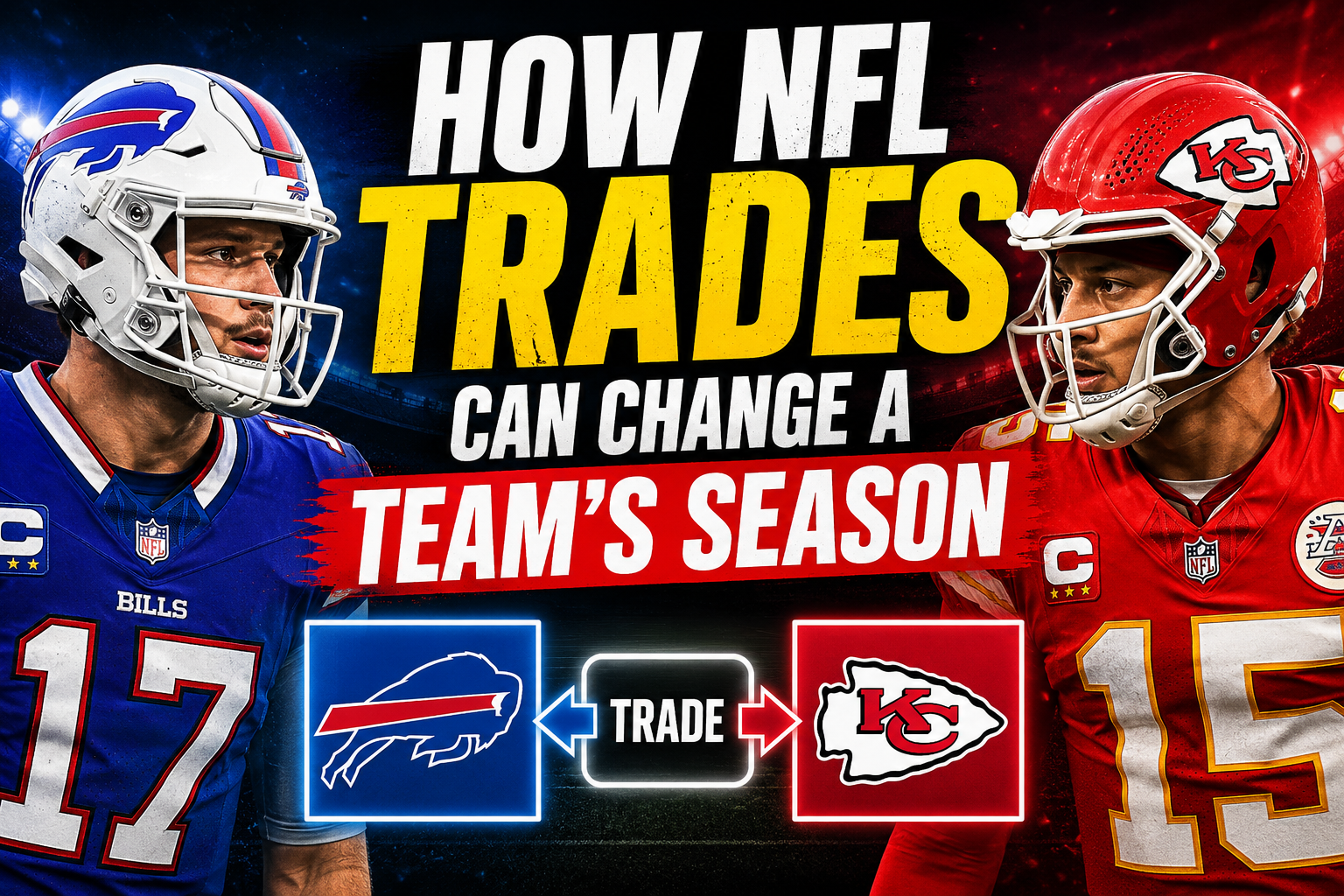
In the NFL, one smart move can completely change the direction of a team. A struggling offense can suddenly become dangerous. A weak defense can become stronger overnight. A team sitting on the edge of the playoff race can turn into a serious contender. That is why NFL trades are always one of the most exciting parts of the football season.
Trades are not just about moving players from one team to another. They are about strategy, timing, money, injuries, team chemistry, and long-term planning. Sometimes, a trade helps a team win right away. Other times, it is about building for the future with draft picks and young talent.
For fans, trades create drama. For coaches, they create new possibilities. For players, they can bring a fresh start. For front offices, trades can decide whether a season becomes a success or a disappointment.
Why NFL Trades Matter So Much
Every NFL team begins the season with a plan, but football rarely follows the plan perfectly. Injuries happen. Young players develop slower than expected. Veterans lose form. Some teams discover they are closer to winning than they thought, while others realize they need to rebuild.
This is where NFL trades become important. A team can use a trade to fix a weakness that was not clear before the season started. For example, if a team loses a key offensive lineman, it may trade for a veteran blocker. If a team’s pass rush is not strong enough, it may look for an edge rusher. If the secondary is giving up big plays, a cornerback or safety could become the target.
Trades matter because the NFL season is short. Unlike baseball or basketball, there are not many games to recover from mistakes. Every win matters. A team that waits too long to improve may fall out of the playoff race before help arrives.
Trades Can Turn Good Teams Into Contenders
Some teams are already strong but need one more piece. These are the teams that often make aggressive moves near the trade deadline. They may already have a quality quarterback, a solid defense, and a strong coaching staff. But if they have one obvious weakness, a trade can make them more complete.
A contender might trade for:
- A wide receiver to add speed
- A pass rusher to pressure quarterbacks
- A cornerback to improve coverage
- A running back to add balance
- An offensive lineman to protect the quarterback
The goal is simple: win now.
When a team believes it has a real chance to compete for a championship, draft picks become tools. Instead of waiting for a future rookie to develop, the team may trade that pick for a player who can help immediately.
However, this strategy comes with risk. If the player does not fit the system, gets injured, or leaves in free agency, the trade may not be worth it. That is why smart teams look for players who match their scheme, locker room, and salary cap situation.
Trades Can Save a Struggling Season
Not every trade is about chasing a Super Bowl. Sometimes, a trade is about saving a season before it falls apart.
A team may start the year with high expectations but lose several close games. Maybe the offense cannot finish drives. Maybe the defense cannot stop the run. Maybe injuries have created a major hole on the roster. In that situation, a trade can give the team new energy.
A new player can also send a message to the locker room. It tells the coaches and players that the front office still believes in the season. That belief can matter. Football is a physical and emotional sport, and confidence can change how a team plays.
Of course, one player cannot fix every problem. If a team has poor coaching, bad quarterback play, or weak discipline, a trade may only cover one issue. Still, the right trade can stop the season from slipping away.
Rebuilding Teams Use Trades Differently
For rebuilding teams, NFL trades have a different purpose. These teams are not always trying to win immediately. Instead, they may trade older players or expensive contracts in exchange for draft picks.
This can be difficult for fans because it may feel like the team is giving up. But rebuilding is sometimes necessary. If a team does not have enough talent to compete, collecting draft picks can help create a stronger future.
A rebuilding team may trade:
- A veteran in the final year of his contract
- A player who no longer fits the new coaching system
- An expensive player who does not match the team’s timeline
- A backup who has value to another team
- A starter at a deep position
The key is value. If a player might leave in free agency, trading him before the deadline can help the team get something in return. Instead of losing the player for nothing, the team gains draft capital.
Good rebuilding teams do not trade just to trade. They have a plan. They identify which players are part of the future and which players can be moved for assets.
The Salary Cap Makes Trades Complicated
NFL trades are not as simple as fans sometimes think. A team cannot just take any player it wants. The salary cap matters. Contracts matter. Bonuses, guarantees, and future money all matter.
A player may look like a perfect fit on the field, but his contract could make the deal difficult. Some teams do not have enough cap space. Others may not want to take on future salary. A front office has to think about this season and the next several years.
That is why some trades involve contract restructuring. A player may agree to adjust his deal, or the team may create cap space by moving money around. These details are not always exciting, but they are a huge part of team building.
Smart teams do not only ask, “Can this player help us?” They also ask, “Can we afford him?” and “Will this move hurt us later?”
Trades Can Change a Player’s Career
A trade can be life-changing for a player. Sometimes, a talented player is stuck in the wrong system. Maybe he is not getting enough targets. Maybe the coaching staff does not use his strengths. Maybe he is behind another star on the depth chart.
When that player gets traded, everything can change.
A wide receiver may go from a run-heavy offense to a pass-heavy offense. A running back may join a team with a better offensive line. A defensive player may move into a scheme that allows him to attack more freely. A quarterback may get better protection and better weapons.
A fresh start can restore confidence. It can also give a player a chance to prove he was undervalued.
But trades can also be challenging. Players must learn a new playbook, move to a new city, build chemistry with new teammates, and adjust quickly. During the season, there is not much time. The best traded players are often the ones who can learn fast and accept their role.
Team Chemistry Is Always a Factor
Talent matters, but chemistry matters too. A team can add a great player and still struggle if the fit is not right.
Football requires trust. Quarterbacks must trust receivers to be in the right place. Offensive linemen must communicate on every snap. Defensive backs must understand coverage responsibilities. Linebackers must react together. If one player misses an assignment, the whole play can break down.
That is why coaches care about personality and work habits. A player who is talented but selfish may not help the locker room. A player who accepts coaching and brings energy can make the team better beyond the stat sheet.
The best NFL trades improve both talent and culture. They bring in players who want to win, work hard, and understand their role.
How Trades Affect Fantasy Football
Fantasy football managers also pay close attention to NFL trades. A trade can change player value immediately.
If a running back moves to a team with a better offensive line, his fantasy value could rise. If a wide receiver joins an offense with a better quarterback, he may become more useful. If a team adds another receiver, the target share for existing players could drop.
Trades can create winners and losers in fantasy football. One player may gain opportunity, while another loses touches or targets.
Fantasy managers should watch these things after a trade:
- Snap count
- Target share
- Red-zone usage
- Touches per game
- Quarterback chemistry
- Offensive scheme
Do not overreact after one game. A newly traded player may need time to adjust. But if his role grows each week, he could become a valuable fantasy option.
The Risk of Overpaying
While trades can help, they can also hurt. Teams sometimes overpay because they feel pressure. A general manager may believe the roster is one player away from greatness and give up too much draft capital.
This can create problems later. Draft picks are important because they provide young, affordable talent. If a team trades too many picks, it may struggle to build depth in future seasons.
There is also the risk that the traded player does not perform as expected. He may struggle with the scheme, get injured, or leave after one season. When that happens, fans and analysts often question whether the trade was worth it.
The best teams balance aggression with discipline. They are willing to make bold moves, but they do not panic.
Final Thoughts
NFL trades can change everything. They can turn a good team into a championship contender, give a struggling team new hope, or help a rebuilding team prepare for the future. A single move can affect the playoff race, fantasy football rankings, locker room energy, and a player’s entire career.
But trades are not magic. The right player must fit the system, the salary cap, the locker room, and the team’s long-term plan. When all of those things come together, a trade can become one of the most important moments of the season.
That is why fans follow trade rumors so closely. Every deal tells a story. Some teams are chasing a title. Some are building for tomorrow. Some are trying to fix mistakes. And some are taking one bold chance that could change their season forever.


No comment